
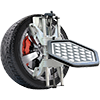
Proper wheel alignment plays an important role in vehicle performance while driving. Alignment ensures that tyres rotate correctly and work together smoothly. As a result of proper alignment, the car travels smoothly, retains its balance, and promotes even wear of the tyres. Improper alignment is often difficult to notice until the problem gradually worsens. The impact of misaligned wheels manifests itself in the form of poor handling, tyre deterioration, and decreased fuel consumption. Knowing how proper alignment affects the performance of a vehicle can help save money and improve driving safety.
Steering Response Changes
One of the initial indications that there is a misalignment problem is the alteration of the steering action. The car becomes difficult to steer even when nothing is showing on the dashboard.
Examples of steering problems are:
- Vehicle pulling to one side
- Uncentred steering wheel while driving in a straight line
- Difficulty in steering direction
- Sluggish steering response
Such problems can affect both safety and driver fatigue, particularly during long trips or when driving on busy roads. In the course of an MOT test, the functioning of the steering system is thoroughly assessed, and any abnormality can be a cause for concern.
Uneven Tyre Wear Patterns
The condition of the tyres is probably one of the best ways to tell whether there are any problems with wheel alignment. This is because improper wheel alignment leads to uneven contact with the road, resulting in premature wear on either the inside or outside of the tyre, along with poor wear patterns on the tread.
It could also lead to premature tyre ageing, as well as a lack of grip while driving on roads that have certain textures. This can be detected during an MOT test, where tyres play a critical role in the test's success.
Impact on Fuel Consumption
Wheel alignment also affects vehicle fuel efficiency. Misaligned wheels increase rolling resistance, meaning the engine has to work much harder to pull the vehicle forward.
This leads to:
- Higher fuel consumption
- Reduced vehicle efficiency
- Increased long-term running costs
Even minor inaccuracies in wheel alignment Harrow can slowly affect gas mileage. This will be more apparent if frequent long-distance vehicle use makes the issue more noticeable.
Suspension System Stress
The suspension system works in conjunction with wheel alignment for stability and comfort. When there is an error in wheel alignment, this causes stress on the suspension system.
This can result in:
- Premature wear of suspension joints
- Increased vibration during driving
- Reduced ride comfort
- Higher repair costs
However, should any problems be detected with the vehicle’s suspension system, it can become a factor in advisories or even failure. Proper alignment will ensure that these parts remain protected from any unnecessary damage.
Vehicle Stability and Control
A vehicle must have stable handling, as it guarantees safety during driving by ensuring that the car handles according to expectations in different situations. Misalignment leads to a decrease in stability, resulting in an unstable drive due to the lack of responsiveness of the vehicle in some cases. For example, the driver might suffer from poor grip when making turns, unstable driving on motorways, and poor performance on uneven roads.
Such driving problems will eventually influence the driver's safety. Vehicle handling is a critical factor considered during the MOT tests.
Connection to MOT Results
However, wheel alignment itself does not have to be the MOT failure point; it can contribute to issues checked during the inspection.
These include:
- Uneven tyre tread depth
- Steering system defects
- Suspension wear and damage
- Reduced vehicle stability
As these areas are thoroughly checked during the MOT inspection, alignment problems may indirectly affect whether a car passes.
Early Warning Signs
Early detection of the alignment problems could help avoid further trouble later on. Most signs will be evident when driving a vehicle regularly.
Key warning signs include:
- Steering wheel off-centre
- Vehicle drifting when driving straight
- Uneven tyre wear patterns
- Steering wheel vibration
- Noisy or unstable handling
Identifying these symptoms early on can help reduce repair costs and improve safety before the next MOT check-up.
Influence on MOT Inspection
When undergoing an MOT test Harrow, certain elements may be affected by wheel misalignment. The tyre condition and tread depth, steering efficiency, and suspension parts will be checked during this process. Wheel misalignment can lead to improper tyre wear, lack of accuracy in steering, and increased pressure on the suspension. However, these conditions alone may not immediately fail the test; nevertheless, a note may be issued due to their influence on the components checked above.
Conclusion
Problems with wheel alignment are very significant when considering factors such as vehicle safety, vehicle performance, and even MOT tests. The condition may gradually form, but the symptoms of the problem would be reflected in things like wear on the tyres, how the steering reacts, how stressed the suspension is, and even in terms of fuel efficiency. The condition itself does not necessarily lead to an MOT failure; however, it contributes to other conditions which could fail the MOT test. Correct wheel alignment will lead to better control while driving, reduced repair bills, and good preparation for the next MOT test.